How to create an online course from what you know
A first online course is built small: one problem, three to five lessons, recorded on Zoom. Why it is worth it, how to pick the topic, and what makes students finish.
 MyVisitoContent teamSeptember 24, 2026 · 7 min read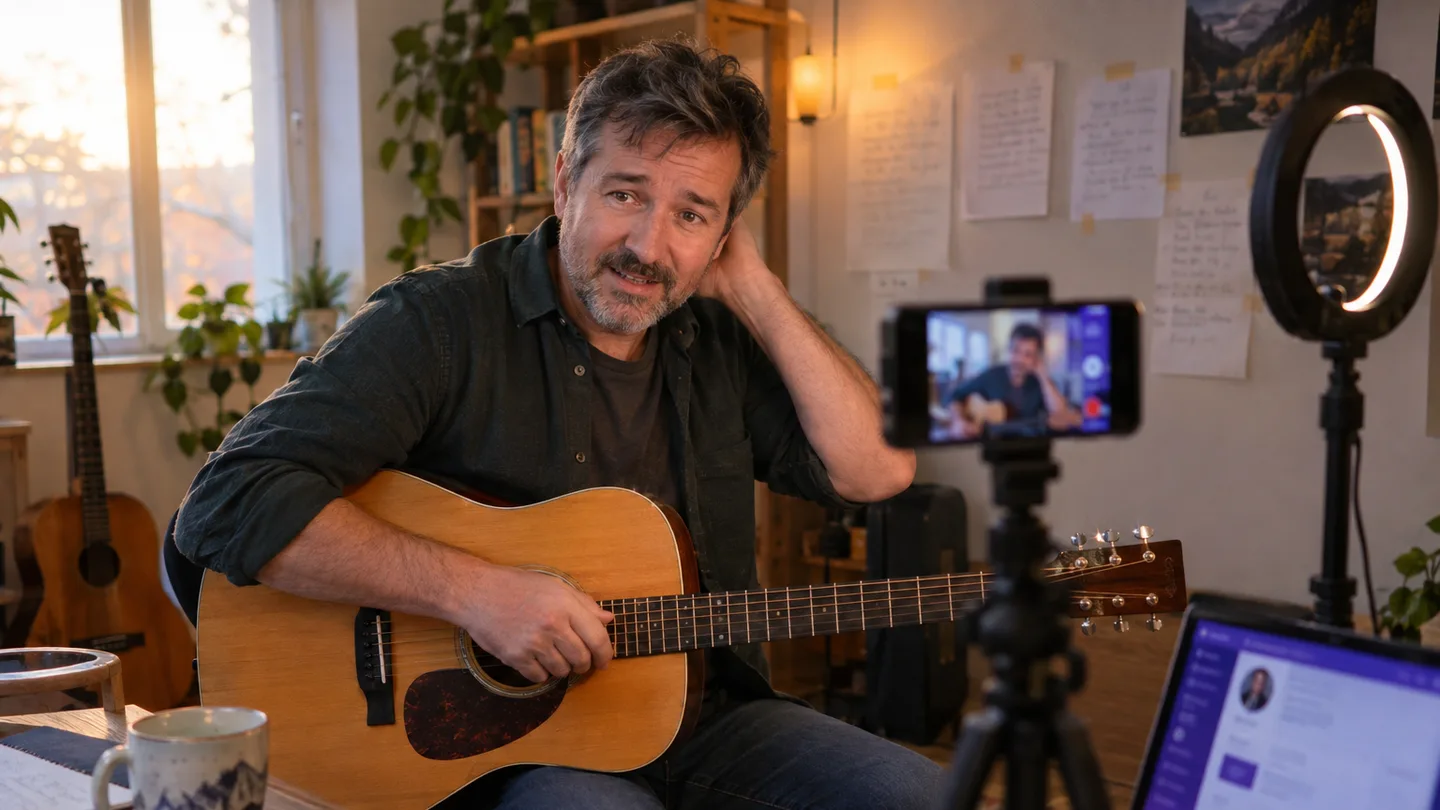
You build a first online course from the thing you explain most often: the one problem every new client arrives with, that you solve for them all over again each time. You take it, break it into three to five short lessons, record it on Zoom or a phone, and put it somewhere a student can log in, watch in order and finish. No studio, no written script, no thirty-lesson course. One outcome the student reaches within two weeks.
In short: knowledge you teach once on camera works for you while you sleep, and a student who reaches you after the course already knows the basics and is ready for the real work. The first course is small and solves one problem. You pick it by the question you get asked most, record lessons of five to ten minutes, and put it where students are counted and can see where they are. You sell it first to people who already know you.
Mark has taught guitar for twenty years. Every new student gets the same four chords from him in the first month, the same explanation of how to hold the pick, and the same advice about sore fingertips. He once counted how many times he had said "it passes after two weeks" and stopped at a hundred. Today he has a five-lesson course, "Your first two weeks with a guitar", that a new student receives before the first meeting. The first meeting starts with the first song. And every month a few people who will never come to him for a private lesson buy the course.
Why turning what you know into an online course is worth it
Four reasons, and only one of them is money. First: the explanation you give a hundred times a year gets said once, well, and freed from your time. Second: a student who has been through the course arrives to work with you prepared, and your expensive hours go to the part that truly needs you. Third: the course is proof. Someone deciding whether to work with you sees how you teach before paying for an hour. And fourth is the income that does not depend on how many hours the day has, which most freelancers reach only through a course.
Online learning works best when the student knows who is teaching and why, and in a small business that is exactly the case: your audience already exists. It is on your list, on your Instagram, in the students' group chat. How to sell an online course without building a website covers the selling side; here you build the course itself.
How to pick the topic for a first course
Not the biggest subject you know, but the smallest problem people pay you to solve. Three tests help you choose. The question asked most: what you explain in every first meeting. An outcome in two weeks: what the student will be able to do at the end, in one sentence, "play a whole song with four chords". And something people already pay you for: if they pay for the hour in which you explain it, they will pay for the recorded version.
A cheap way to test a topic before recording: a free guide of four pages on the same problem. If people download it and ask follow-up questions, the course is already sold in their heads.
See what yours would look like
Tell the AI assistant about yourself and your card's draft is waiting in the editor. Start free, no credit card needed.
Create your free cardWhat a good course needs so students actually finish it
Most people who buy an online course do not finish it, and the completion rates of large online courses are famously low. A student who did not finish does not recommend it and does not buy the next one. What raises completion is not better content but a structure that is easy to move through:
- Short lessons, five to twelve minutes. A forty-minute lesson gets postponed to "tomorrow".
- One outcome per lesson, sayable in a sentence: "by the end of this lesson you switch between two chords without stopping".
- One exercise at the end of each lesson, five minutes long, that the student does before moving on.
- Visible order, where am I and what is left. Five lessons that get ticked off when done, not a folder of files.
- A sign that you finished: a short quiz or a certificate. It sounds small, and it is what gets people to the last lesson.
How to record a course without a studio, in five steps
- Write three lines for each lesson: what the student will know at the end, the three points along the way, and the exercise. Not a script. Those lines on a note next to the camera are enough.
- Record on a phone or on Zoom. A phone on a tripod facing a window for guitar, yoga, makeup. Zoom with screen sharing for anything that happens on a computer: spreadsheets, design tools, forms. Light from the window, never behind you.
- A simple microphone. Earbuds with a mic or a cheap clip-on microphone change the course more than any camera. People forgive an average picture and do not forgive sound they cannot hear.
- One take per lesson. Stumbled on a word? Keep going. Students like a teacher who talks like in a real lesson. Heavy editing is the number one reason courses never get released.
- Upload and check on a phone. Most students watch on a phone, in bed or on the bus. If the lesson works there, it works.
Where the course lives, and how the student gets in
Two options. Large course marketplaces, which bring their own traffic but place you next to ten competing courses, set the price and keep the student list. Or your own page, where the course sits next to your story, your testimonials and your services, and the students are yours. For a small business whose audience already knows it, the second is almost always right.
What the student needs either way: one place to log into from any device, lessons in order with completed ones marked, files attached next to the lesson, and a certificate or a quiz at the end. On MyVisito that is the courses system that sits on your card: chapters and lessons in the editor, lessons you can release gradually, quizzes, a completion certificate in the student's language, and a personal area for every student. The beginner's guide to selling shows the screens.
What to charge for a first course, and how to sell it without pushing
A simple anchor: a course that replaces one or two sessions with you is worth less than one session, because you are not in it, and more than a book, because your method is. You set the exact number by what your audience is used to paying, and raise it after the first ten students.
Sell first to people who already know you: current students, the list, whoever downloaded the free guide. One personal message, "I built this for you, first-week price", brings the first ten. Their reviews sell the rest. How to build a customer list from zero explains how that list gets built, and testimonials and a portfolio what to do with the students' reviews. And if you also want to teach in person, a registration page for a workshop works on the same page.
Frequently asked questions
How many lessons should a first online course have?
Three to five, of five to twelve minutes each. A course people finish in a week and get a result from sells and gets recommended more than a thirty-lesson course they abandon halfway. You build the big course later, from the graduates' questions.
Do I need professional recording equipment to build a course?
No. A phone from the last few years, a tripod, light from a window and a cheap clip-on microphone are enough. The one thing not to compromise on is the sound: it has to be clear without effort.
What if nobody buys the course at first?
Check three things in this order: whether the title is an outcome the student wants, whether you offered it to people who already know you before advertising to strangers, and whether your page has testimonials. In most cases the problem is one of the three, not the course.
A recorded course or live lessons on Zoom?
Start recorded, because it sells while you are busy and does not require coordinating ten people. One live session for graduates once a month gives the personal connection and raises completion. How to build a community around a small business explains how that session turns students into an audience that comes back.
 MyVisitoContent team
More from the blog
Why every small business needs a free guide, and how to make one
A free downloadable guide turns a passing visitor into a person on your list. Why it works, what goes in it, how to make one in an hour, and where to offer it.A digital business card with payments: what to check first
A link out, payment details on display, or a real checkout inside the page? Six questions that separate a pay button from a shop, and how MyVisito does it.How to sell an online course without building a website
People keep asking for your knowledge? You can sell an online course straight from your business card: a sales page, payment, student access and tracking, no website and no five-tool stack.